
What to Do If Someone is Detained by ICE?
If your spouse, parent, child, family member, or loved one has been detained by U.S. Immigration and Customs Enforcement (ICE), you may not know where they are, why ICE detained them, whether they can be released, or what you are supposed to do next.
Start here.
Call us at (561) 609-0032 to schedule a consultation with an Asghar Law immigration attorney. We will prioritize your matter for a potential same-day consultation.
The first hours after an ICE detention can be confusing. Your loved one may still be processing, ICE may transfer them to another detention facility, and it can take time before information about their location becomes available.
This guide explains what you can do now, what may happen after someone is detained by ICE, and when an immigration attorney may be able to help.
STEP 1: Gather the Information You Have
If ICE has detained someone you love, begin by writing down as much information as possible. Try to gather:
- Full legal name
- Date of birth
- Country of birth
- Alien Registration Number (A-Number), if available
- Where and when the ICE detention occurred
- Which agency detained them, if known
- Current immigration status
- Copies of immigration documents
- Any upcoming immigration court dates
- Information about previous immigration cases
- Information about previous arrests or criminal cases, if applicable
What Is an A-Number?
An Alien Registration Number, commonly called an A-Number, is a unique identifying number used by the U.S. government for certain immigration records.
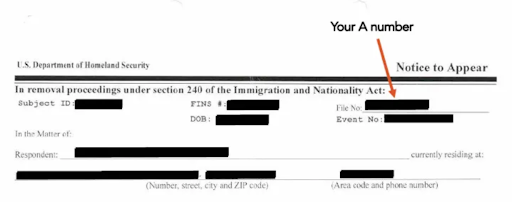
If your loved one has an A-Number, it can make it easier to locate them after an ICE detention.
The A-Number may appear on immigration documents, including a Notice to Appear.
STEP 2: Try to Locate Your Loved One in ICE Custody
ICE operates the Online Detainee Locator System (ODLS), an online tool that family members, attorneys, and members of the public can use to locate certain individuals currently detained by ICE.
You may be able to search using:
Option 1:
A-Number + Country of Birth
Option 2:
Full Name + Country of Birth
ICE states that its system uses an exact-match search, so names should be entered as they appear in the person's detention records.
What If the ICE Detainee Locator Does Not Find Them?
Do not immediately assume your loved one is not in ICE custody.
If ICE detained them recently, you may still be trying to determine where they are being processed or held. ICE may also transfer detained individuals between detention facilities.
Continue gathering information about the detention and the person's immigration history.
USCIS Online Detainee Locator System
STEP 3: Understand What ICE May Review After Detention
After someone is detained by ICE, the U.S. Department of Homeland Security (DHS) may review the person's immigration history and determine what happens next.
DHS is the federal department responsible for immigration enforcement agencies including ICE.
Depending on the circumstances, officials may review:
- Identity
- Immigration status
- Immigration history
- Previous deportation or removal orders
- Pending immigration applications
- Criminal history, if any
- How and when the person entered the United States
- Whether removal proceedings are pending or should be initiated
- Whether the individual may qualify for release
ICE may also move someone from one detention facility to another while the immigration case is pending.
STEP 4: Find Out Whether ICE Has Placed Them in Removal Proceedings
Some individuals detained by ICE may be placed into removal proceedings, the immigration court process used to determine whether someone may be removed from the United States.
The government may issue a Notice to Appear (NTA), Form I-862.
An NTA is the document DHS uses to identify the factual allegations and legal charges it believes support removing a person from the United States.
What Does NTA Mean?
NTA stands for Notice to Appear.
Removal proceedings generally begin when DHS files the NTA with the immigration court after it has been served on the individual.
Receiving an NTA Does Not Automatically Mean Someone Will Be Deported
An NTA begins the immigration court process.
At an immigration court hearing, the immigration judge may consider whether the government's allegations are correct, whether the person is removable, and whether the individual may qualify for a form of relief from removal.
STEP 5: Can Someone Detained by ICE Get Out of Detention?
This is often one of the first questions families ask:
“ICE detained my loved one. Can we get them out?”
The answer depends on the person's individual circumstances. In certain cases, someone detained by DHS may be eligible for release through an immigration bond.
DHS may initially set a bond. In circumstances where an immigration judge has legal authority over the custody determination, the person may request a bond hearing and ask the judge to reconsider the bond or custody decision.
Not everyone detained by ICE is eligible for an immigration bond or a bond hearing.
Eligibility can depend on issues such as:
- Immigration history
- How the person entered the United States
- Prior removal or deportation orders
- Criminal history
- The legal reason for detention
- The status of the immigration case
An attorney reviewing the case may need to determine which detention rules apply before advising the family about potential release.
STEP 6: Start Gathering Important Documents
While your loved one remains in ICE detention, family members can begin gathering documents that may become important.
Immigration Documents
Look for:
- Permanent Resident Card, commonly called a Green Card
- Employment Authorization Document (EAD), commonly called a work permit
- Passport
- Visa
- Form I-94 Arrival/Departure Record
- Previous immigration applications
- Notices from U.S. Citizenship and Immigration Services (USCIS)
- Immigration court documents
- Previous removal or deportation documents
- Notice to Appear
Acronyms to Know
- ICE: U.S. Immigration and Customs Enforcement
- DHS: U.S. Department of Homeland Security
- USCIS: U.S. Citizenship and Immigration Services
- NTA: Notice to Appear
- ODLS: Online Detainee Locator System
- EOIR: Executive Office for Immigration Review
- EAD: Employment Authorization Document
The Executive Office for Immigration Review (EOIR) is the part of the U.S. Department of Justice that administers the nation's immigration courts.
Family Documents
These may include:
- Marriage certificate
- Children's birth certificates
- Spouse's immigration documents
- Evidence of family relationships
Evidence of Community Ties
Depending on the case, documents may include:
- Proof of residence
- Employment records
- Tax records
- Letters of support
- Evidence of long-term residence in the United States
Criminal Records, If Applicable
If the person detained by ICE has ever been arrested, cited, or charged with a crime, tell the immigration attorney.
That includes incidents that:
- Happened years ago
- Were dismissed
- Were expunged
- Resulted in probation
- Seemed minor at the time
The attorney may need court records to evaluate how the incident affects ICE detention, bond eligibility, or the underlying immigration case.
STEP 7: Understand What May Happen in Immigration Court
If ICE detains someone and places them in removal proceedings, an immigration judge may hear the case.
Immigration judges determine issues including whether an individual is removable from the United States and whether the individual may qualify for certain forms of relief from removal. A person's immigration court case may include different types of hearings.
Master Calendar Hearing
A Master Calendar Hearing is generally a preliminary immigration court hearing.
During this stage, issues may include:
- The allegations in the Notice to Appear
- The government's charges
- Whether the person has an attorney
- What type of immigration relief the person intends to request
- Filing deadlines
- Future immigration court dates
Individual Hearing
An Individual Hearing, sometimes called a merits hearing, is generally the hearing where the immigration judge examines the contested issues in the case and considers the person's request for immigration relief in greater detail.
Depending on the case, the detained individual may have the opportunity to:
- Testify before the immigration judge
- Present witnesses
- Submit documents and other supporting evidence
- Explain why they qualify for the immigration relief being requested
- Respond to evidence and arguments presented by the Department of Homeland Security (DHS)
Examples of supporting evidence may include immigration records, family documents, affidavits, medical records, police or court records, and other documents relevant to the specific form of relief being requested. EOIR advises parties to prepare and file relevant evidence before the hearing and comply with applicable filing deadlines.
The immigration judge will consider the evidence, testimony, and legal arguments presented before making a decision or determining what happens next in the case.
Preparation matters. Missing evidence, incomplete applications, or missed filing deadlines can affect what the immigration judge is able to consider.
Can Someone Fight Their Case After ICE Detains Them?
Possibly. Being detained by ICE does not automatically mean someone will be deported.
Depending on the person's immigration history and circumstances, there may be legal defenses or forms of immigration relief that should be evaluated.
Potential forms of relief may include, when legally available:
- Asylum
- Cancellation of removal
- Adjustment of status
- Certain immigration waivers
- Protection under the Convention Against Torture
- Other defenses or forms of relief under U.S. immigration law
Whether any option applies depends on the individual case.
What Should the Family Do After an ICE Detention?
If ICE has detained someone you love:
- Write down their full legal name and date of birth
- Find their A-Number, if available
- Determine when and where ICE detained them
- Search the ICE Online Detainee Locator System
- Gather their immigration documents
- Locate any Notice to Appear or immigration court documents
- Identify previous immigration cases
- Determine whether there was a previous removal order
- Gather criminal court records, if applicable
- Identify upcoming immigration court dates
- Speak with an immigration attorney about the detention
Questions Families Frequently Ask After an ICE Detention
How do I find someone detained by ICE?
ICE provides an Online Detainee Locator System that can be searched using an A-Number and country of birth or identifying information such as the person's name and country of birth.
What does ICE stand for?
ICE stands for U.S. Immigration and Customs Enforcement. It is an agency within the U.S. Department of Homeland Security.
What is an A-Number?
An Alien Registration Number, or A-Number, is an identifying number used by the federal government for immigration records. USCIS explains that it is assigned by DHS and used to identify immigration records.
Can ICE move my loved one to another detention center?
Yes. DHS sometimes transfers detained individuals between detention facilities.
Can someone detained by ICE get a bond?
Some people may qualify for immigration bond, while others may not. DHS initially sets bond in applicable cases, and an immigration judge may have authority to reconsider that custody determination in certain circumstances.
Does ICE detention automatically mean deportation?
No. Detention and deportation are not the same thing. A detained person may have removal proceedings, possible defenses, applications for immigration relief, or other legal issues that must first be considered.
What is a Notice to Appear?
A Notice to Appear (NTA) is the charging document used by DHS in removal proceedings. It identifies factual allegations and the legal grounds the government claims support removal.
What does EOIR mean?
EOIR stands for Executive Office for Immigration Review. It is part of the U.S. Department of Justice and administers the immigration court system.
Your Loved One Has Been Detained by ICE. Find Out What Happens Next.
When ICE detains someone you love, the immediate questions are often:
- Where did ICE take them?
- Why are they being detained?
- Can they get out?
- Are they facing deportation?
- What should our family do right now?
You do not have to try to answer those questions on your own.
Schedule a Consultation With Asghar Law
If your loved one has been detained by ICE, schedule a consultation with Asghar Law. We will prioritize your matter for a potential same-day consultation so our team can review the circumstances of the detention and help you understand the next steps.
Speak With an ICE Detention Attorney in West Palm Beach
If your loved one has been detained by ICE, the first step is understanding where they are being held, why they were detained, and what legal options may be available.
Asghar Law assists individuals and families in West Palm Beach, Palm Beach County, Orlando, throughout South Florida, and beyond with ICE detention, immigration bond, and removal defense matters.
Call (561) 609-0032 to schedule a consultation with an Asghar Law immigration attorney. We will prioritize your matter for a potential same-day consultation.
Asghar Law | Your Trusted Partner in Immigration.
This page is for general informational purposes only and does not constitute legal advice. Immigration laws, policies, filing requirements, government fees, processing times, and visa availability can change. Speak with a qualified immigration attorney regarding your individual circumstances.
Where Legal Solutions and Compassion Converge
Our experienced team goes the extra mile to ensure your needs are met with precision and care. We believe in not only meeting but exceeding your expectations, setting a new standard in the legal field. Experience the difference for yourself and discover why our clients trust us to handle their immigration legal matters. Your journey begins with the extraordinary.
-
A Legacy of TrustEstablished in 2014, Asghar Law boasts a legacy of trust and excellence. Our 10+ years of experience are a testament to our deep understanding of immigration laws and processes.
-
Direct Attorney ConsultationsEvery consultation at our firm is directly with an attorney, ensuring that you receive personalized and expert legal guidance from the very beginning.
-
Multilingual SupportLanguage should never be a barrier. Our team speaks Spanish, Creole, and Arabic, providing comprehensive support to diverse communities.
-
Transparency and Timely UpdatesWe provide continuous updates on your case's progress, coupled with comprehensive explanations of each step and any legal changes that may impact your situation.